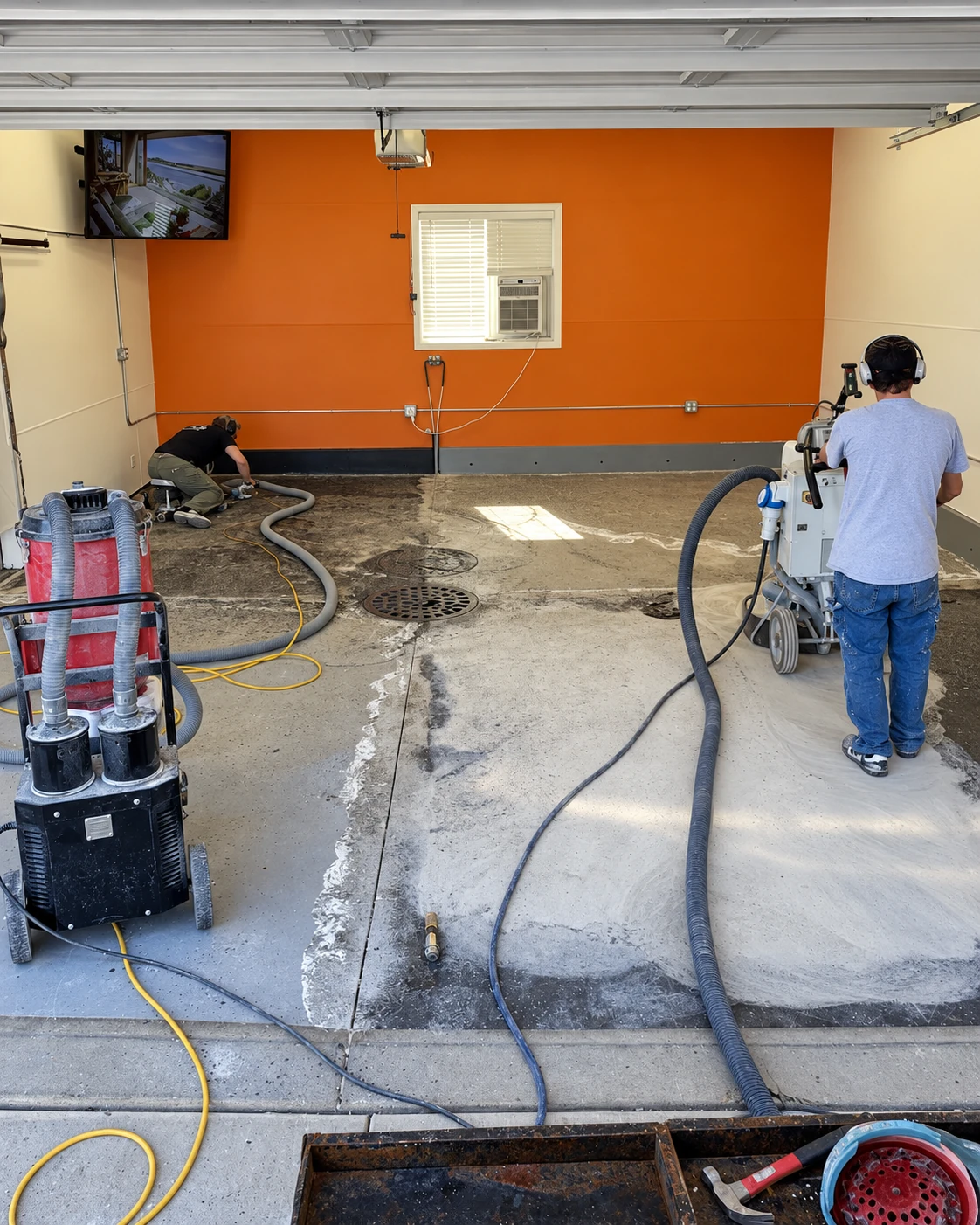
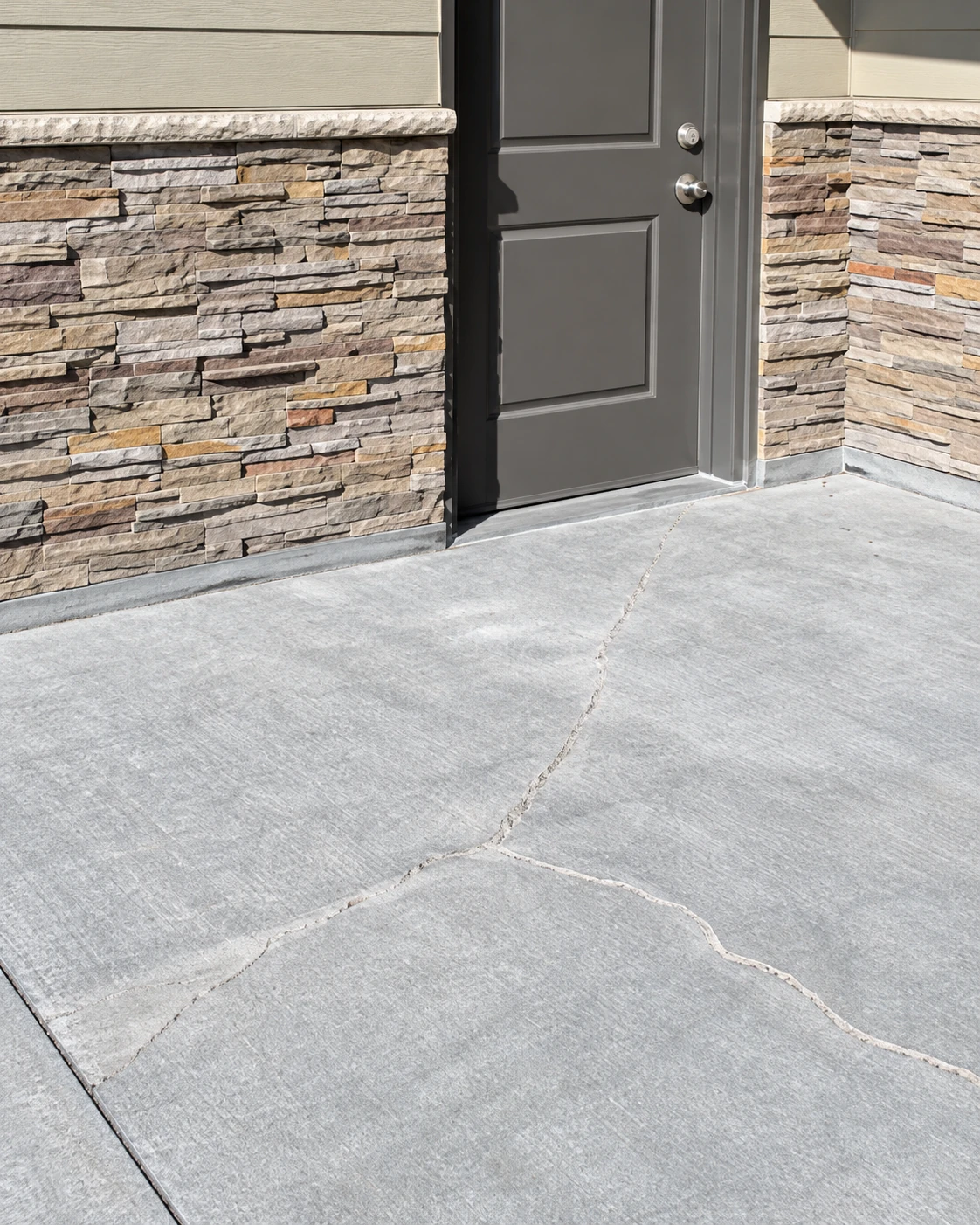
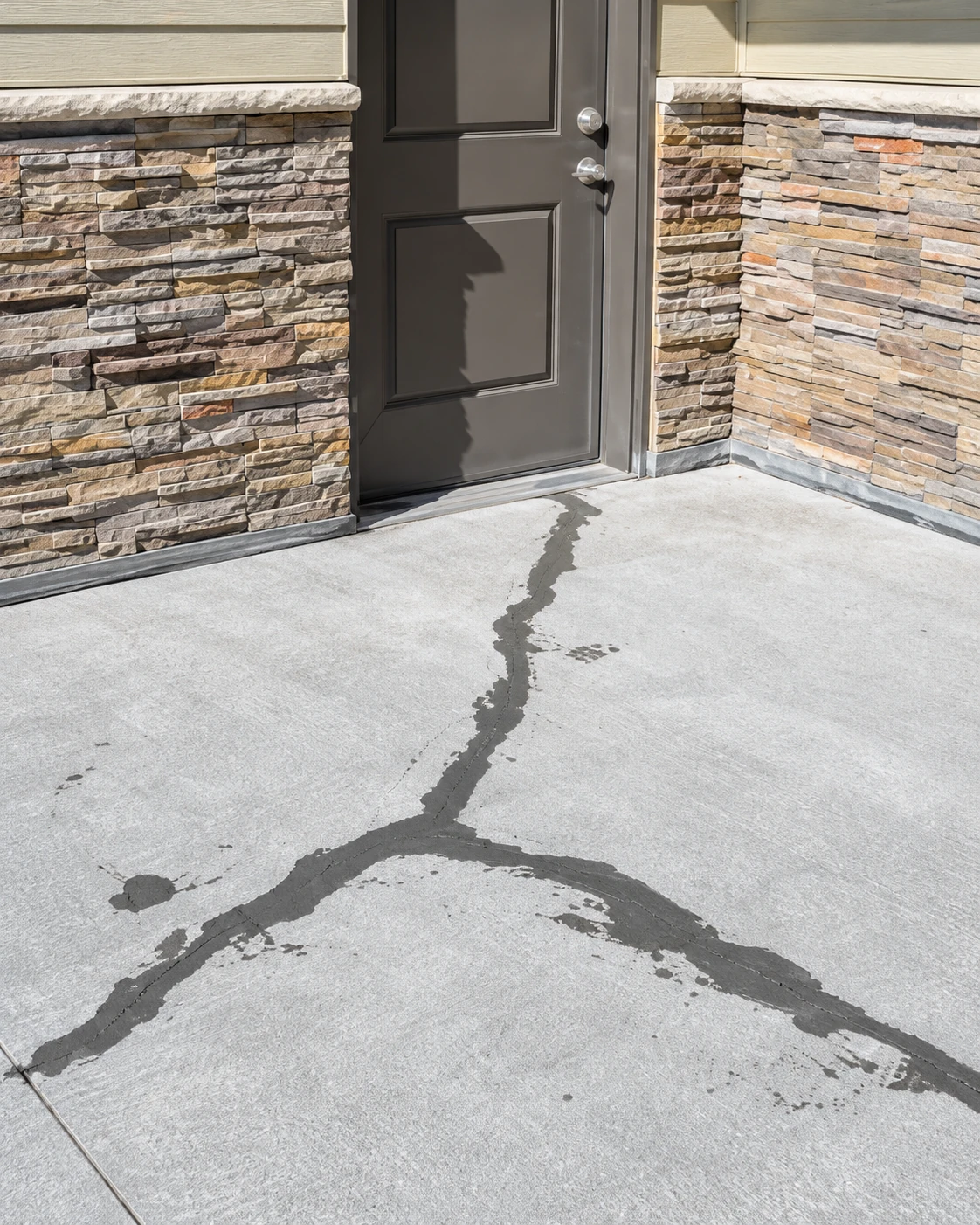
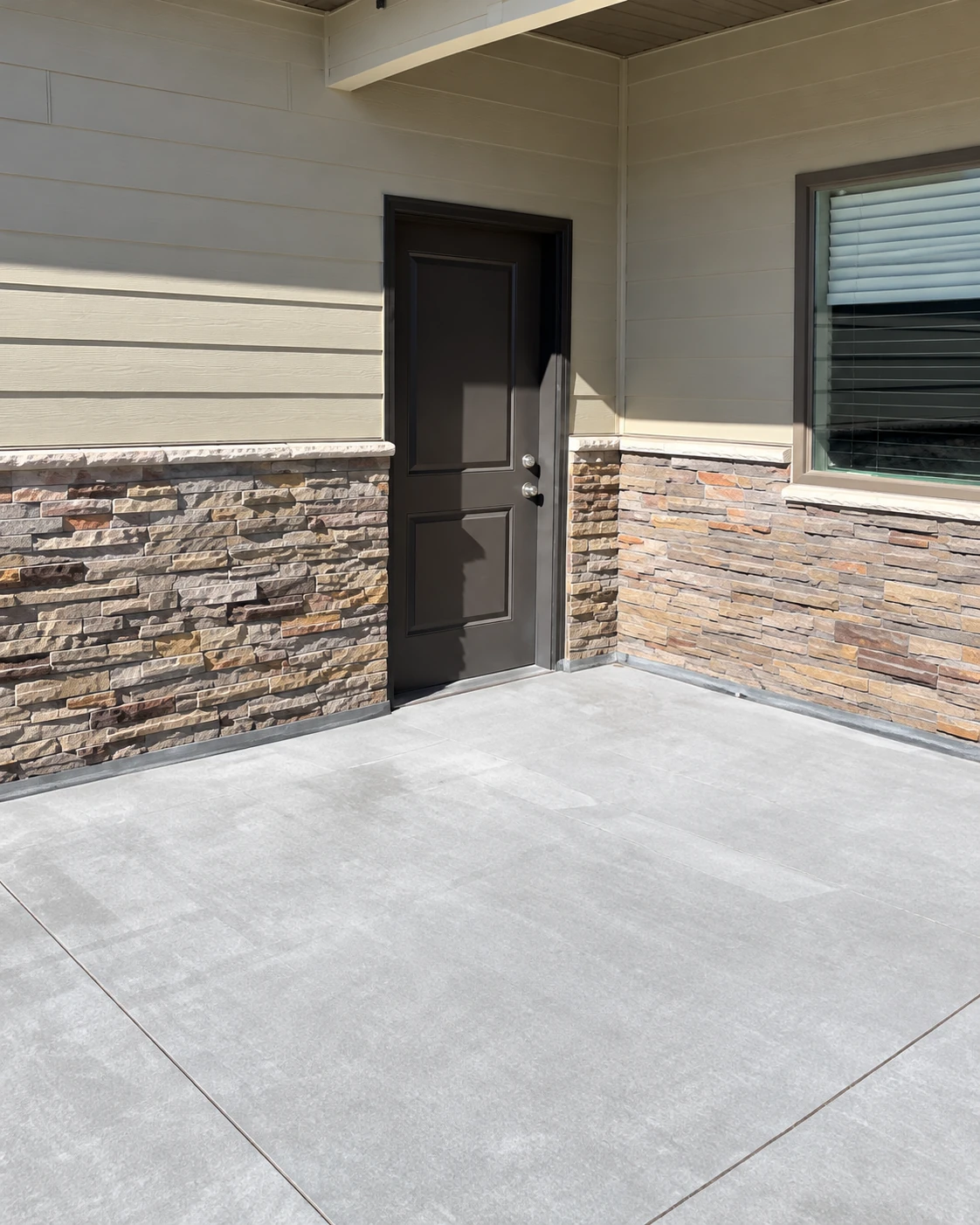
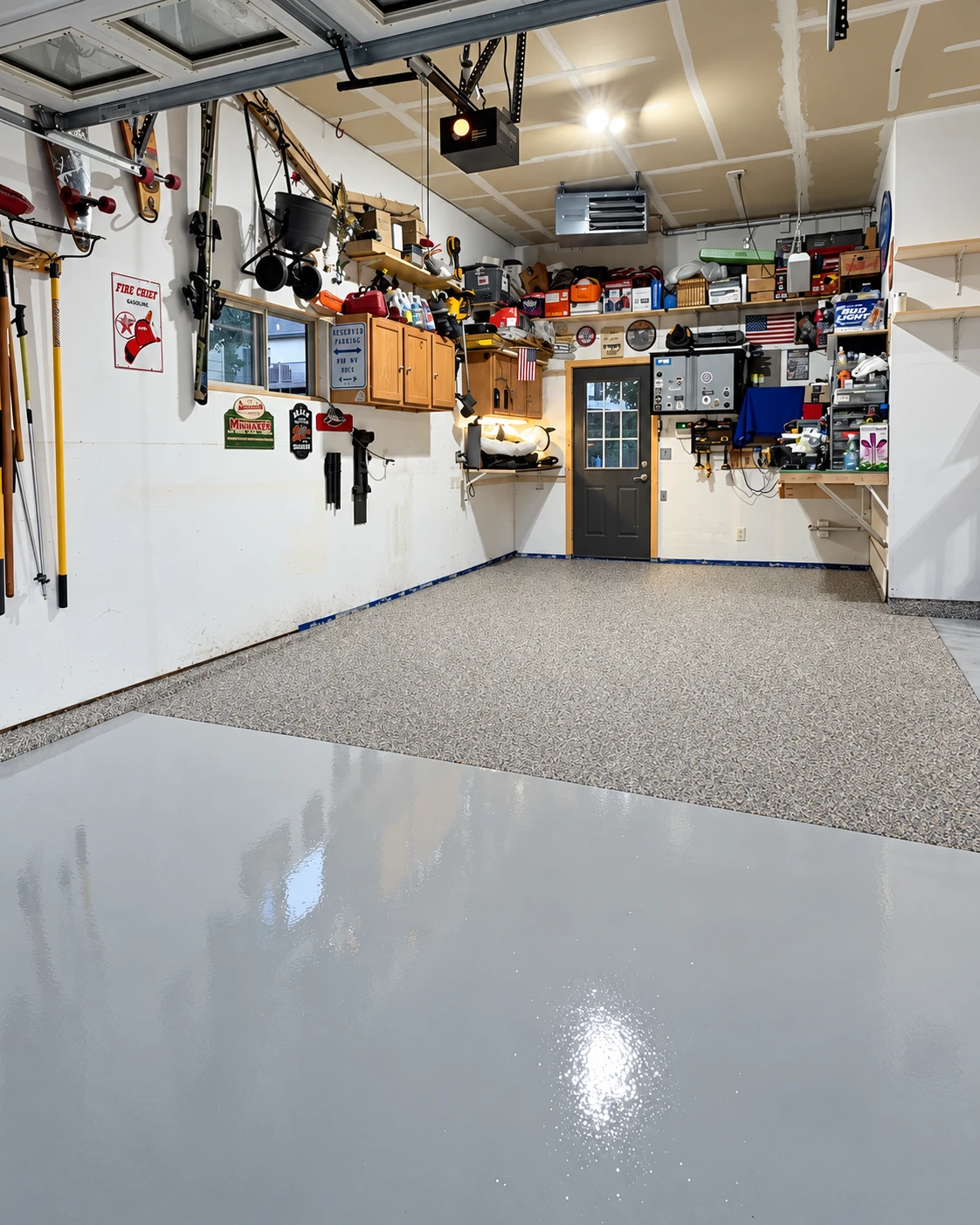
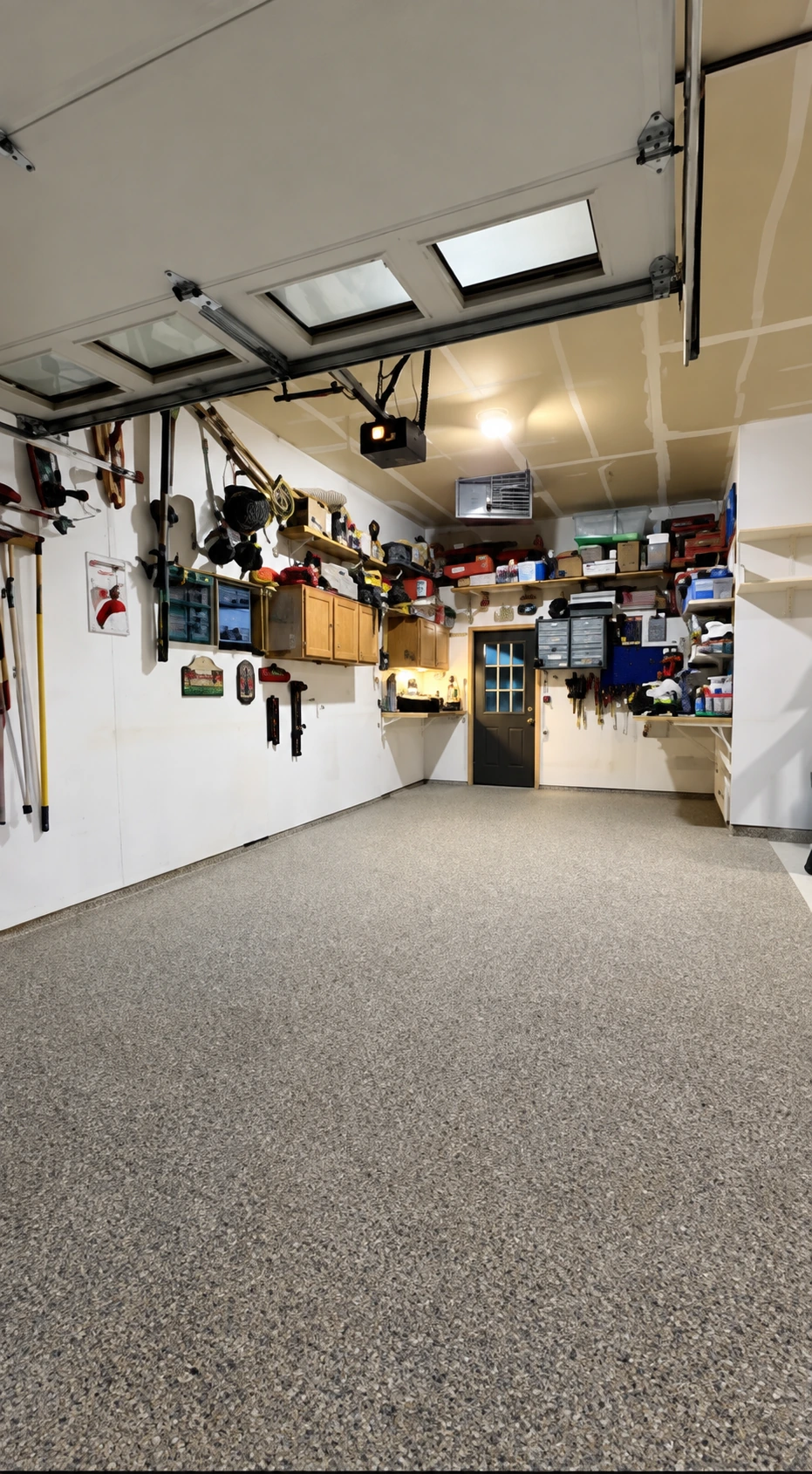
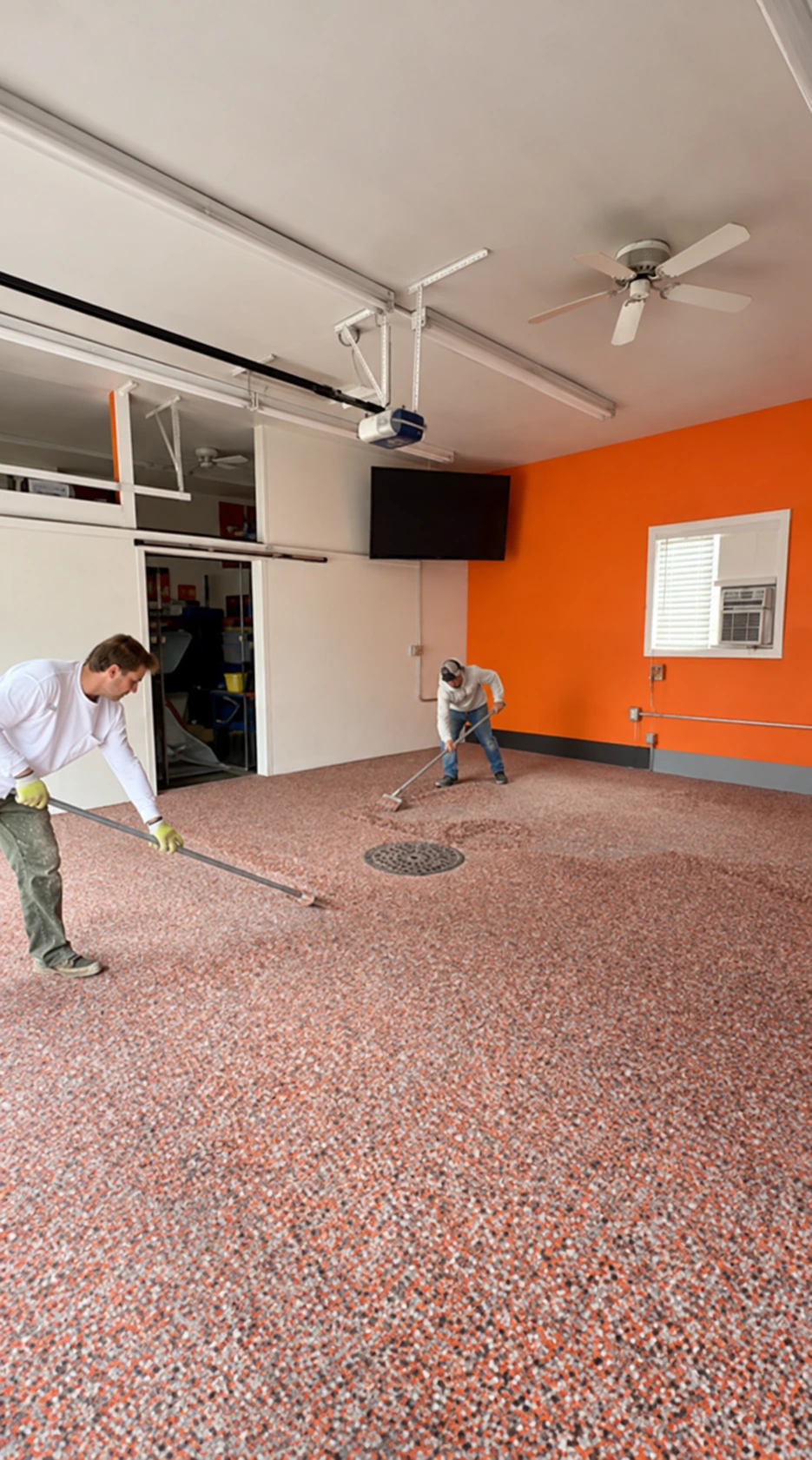
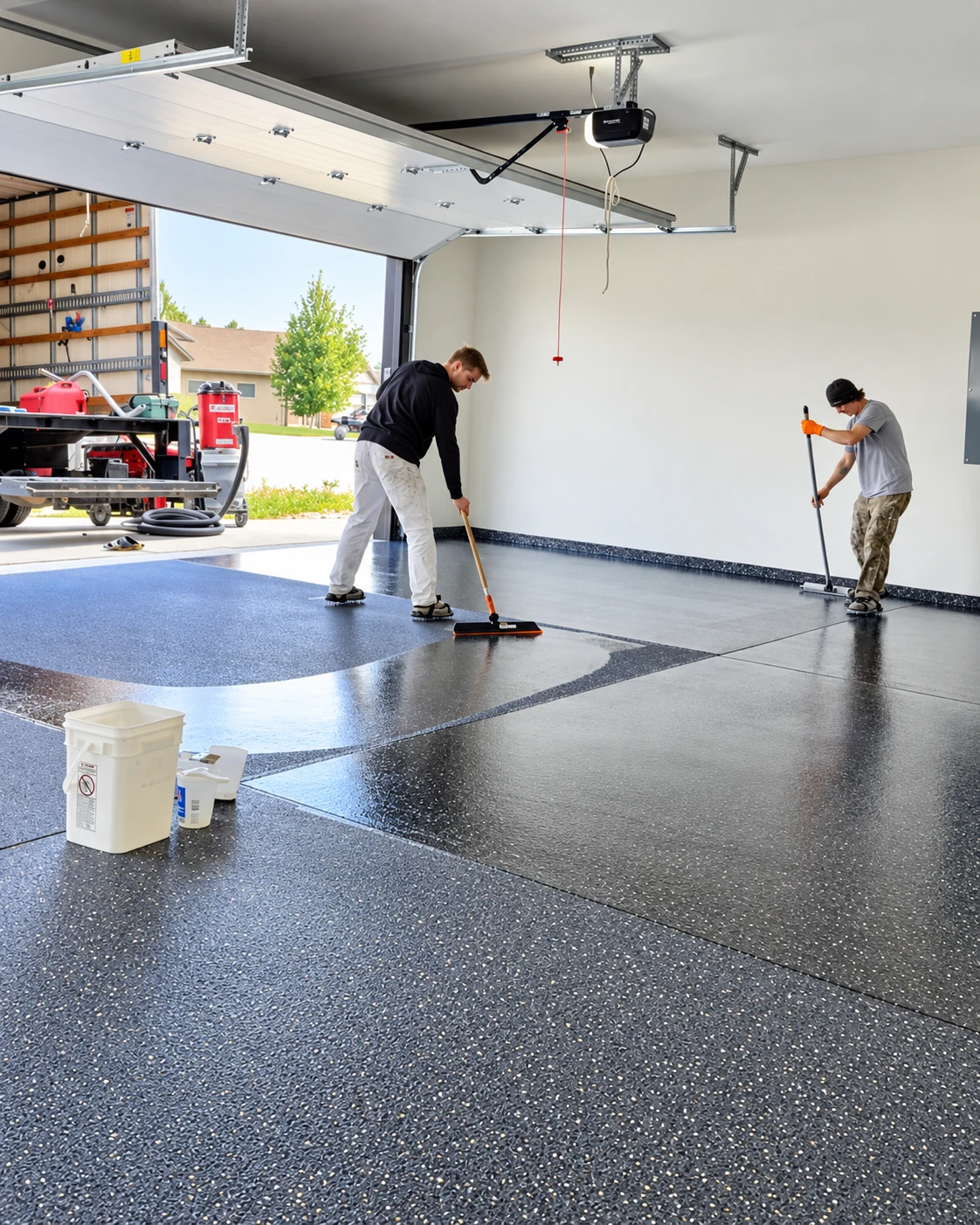
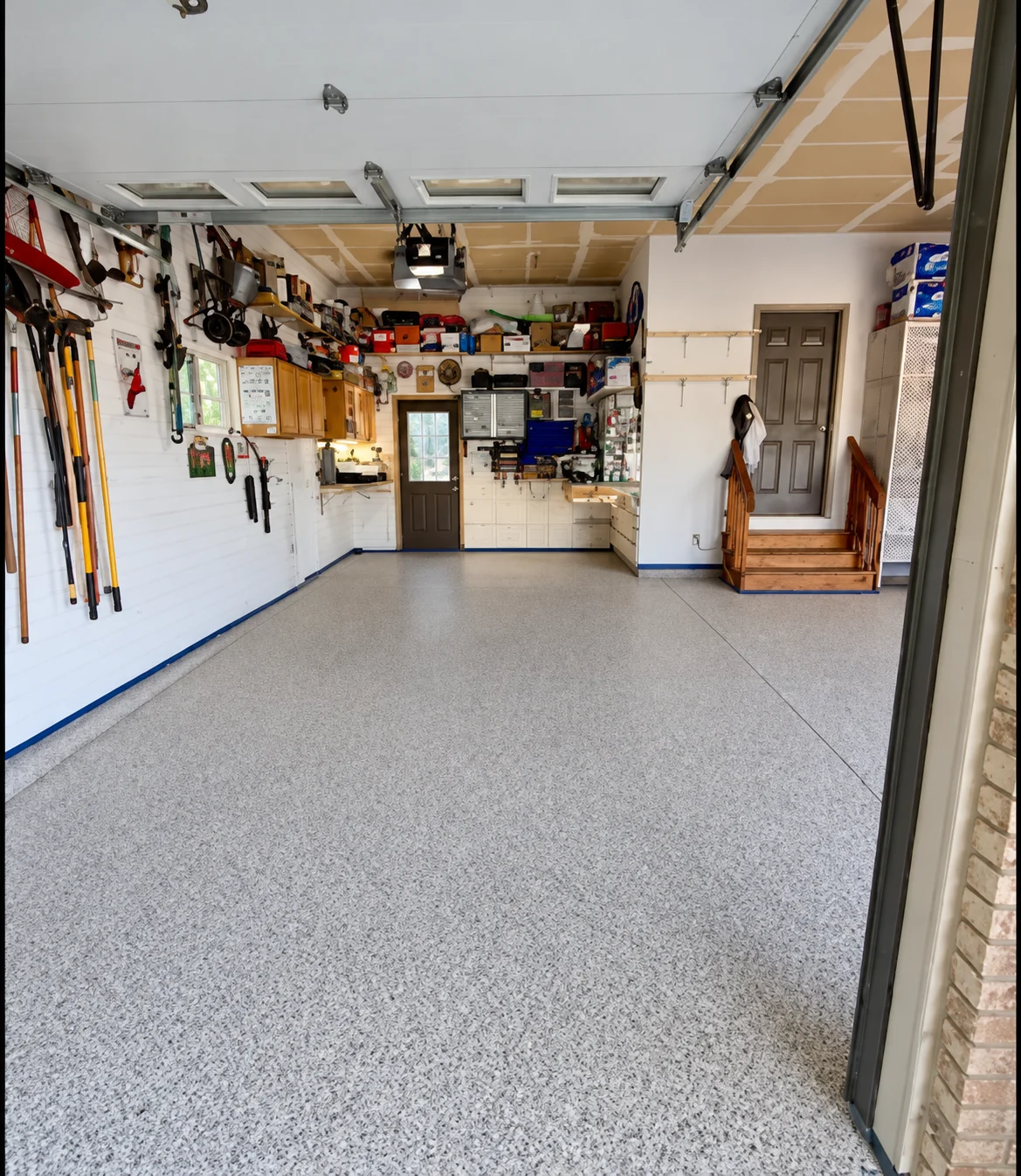
We put the most extensive, hands-on preparation into every project, take the time to tape and cover up areas around the project, and tailor the coating, finish and system to your needs.
01
Grind the floor
02
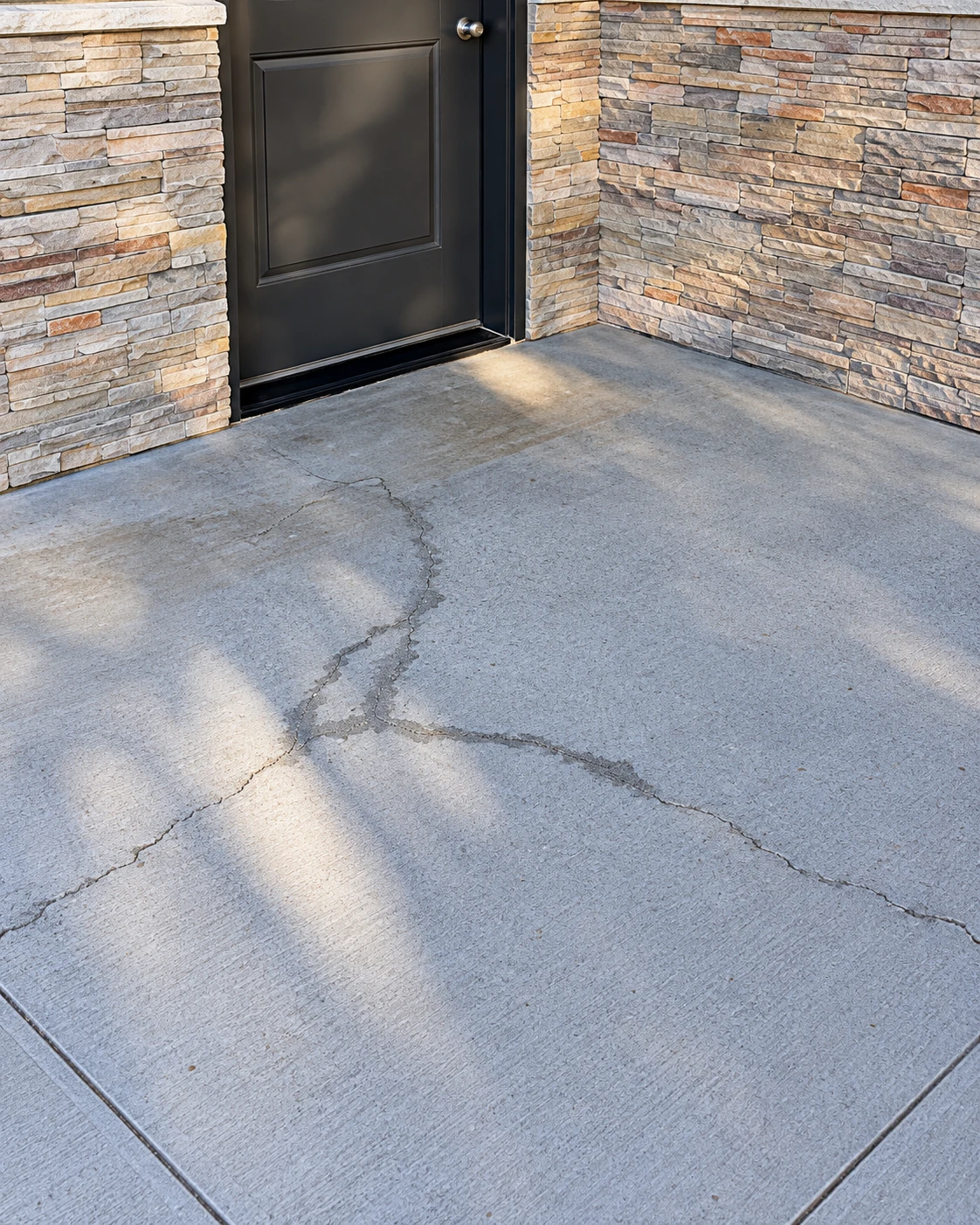
Inspect cracks and surface damage
03
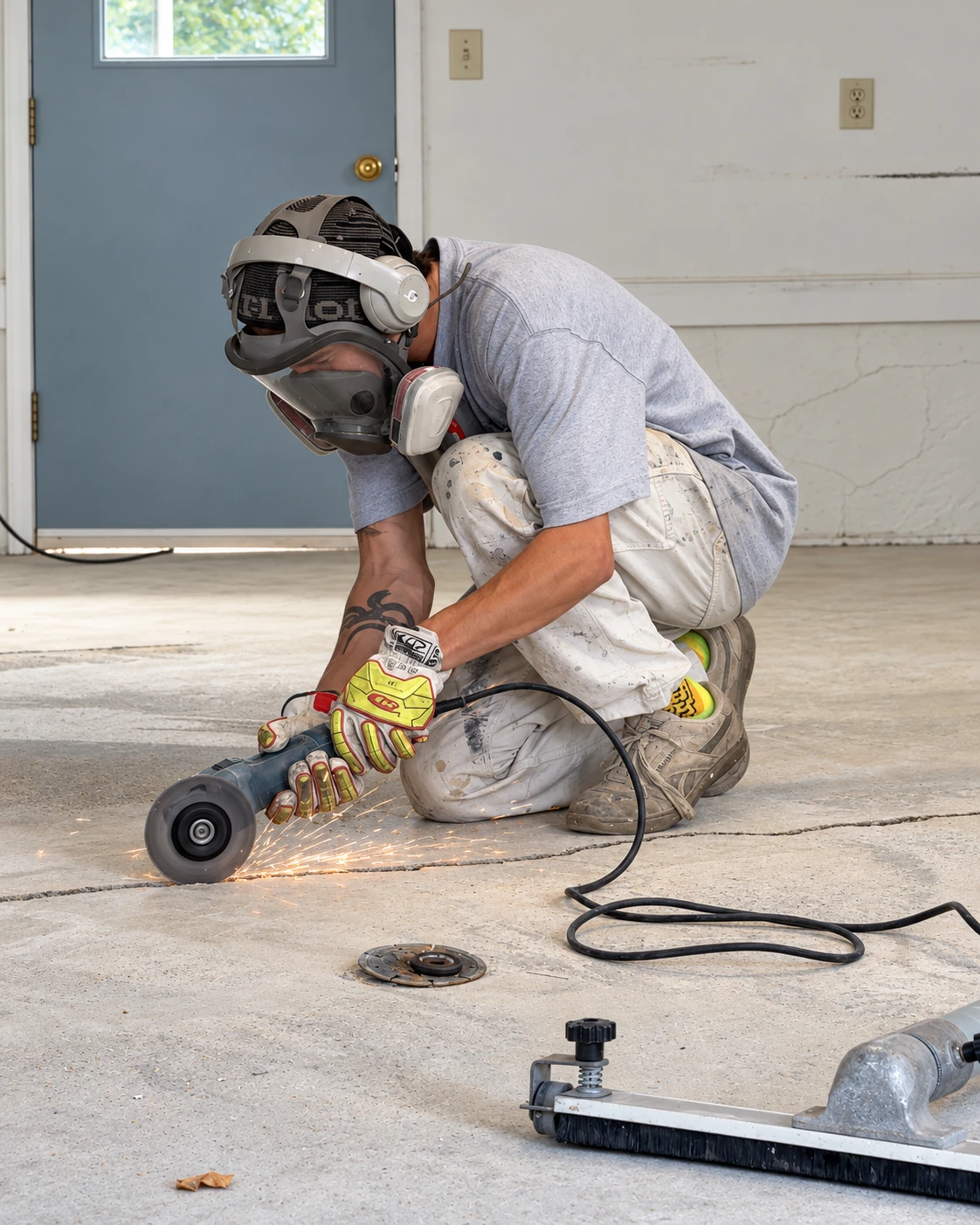
Cut open cracks
04
Clean and prepare opened cracks
05
Fill cracks and pits with two-part mender and sand
06
Grind excess mender uniform with the floor
07
Apply the colored basecoat
08
Cover in flake—broadcast until rejection
09
Scrape and clean excess flake
10
Squeegee and roll a traction-tailored topcoat
11
Finished floor ready to enjoy.
COMPARE THE THREE OPTIONS
Every floor has different needs.
We work with epoxy, polyurea, and polyaspartic systems. Comparing their advantages and trade-offs helps us recommend the right combination for your floor.
This is how we are able to guarantee our floors are
✓
Chemically Bonded to your concrete
✓
Have the strongest moisture and vapor barrier
✓
Flex with shifting pads
✓
Are impact, hot tire peal, UV and slip resistant.
and why we cant ✕ promise the fastest install time.
What to compare
Epoxy
Polyurea
Polyaspartic
Typical role
Primers, basecoats, and build coats, depending on the product.
Fast-curing coatings and bonding layers in suitable systems.
Decorative flake basecoats and clear protective topcoats, depending on the product.
Advantages
Strong concrete bonding; options for high-build floors and moisture-vapor control.
Formulations can offer rapid curing, flexibility, and tough protective layers.
UV-stable, non-yellowing options with wear resistance and easy-care finishes.
Trade-offs
Many exposed epoxy finishes can yellow in sunlight; curing time varies by formulation.
Fast-setting products require careful application. UV stability depends on aromatic or aliphatic chemistry.
Surface preparation, moisture limits, and shorter working windows still require attention.
Cure & sunlight
Standard and fast-cure products exist. Choose a compatible UV-resistant finish where needed.
Often fast-curing. Confirm the exact product’s working time, use times, and UV performance.
Rapid-curing options; return-to-use timing depends on the product and conditions.
Epoxy
Advantages: Bonding, build coats, and moisture-control options.
Consider: Some exposed finishes yellow in sunlight; cure times vary.
Full comparison
Typical role
Primers, basecoats, and build coats, depending on the product.
Advantages
Strong concrete bonding; options for high-build floors and moisture-vapor control.
Trade-offs
Many exposed epoxy finishes can yellow in sunlight; curing time varies by formulation.
Cure & sunlight
Standard and fast-cure products exist. Choose a compatible UV-resistant finish where needed.
Consider: Careful prep, moisture limits, and shorter working windows.
Full comparison
Typical role
Decorative flake basecoats and clear protective topcoats, depending on the product.
Advantages
UV-stable, non-yellowing options with wear resistance and easy-care finishes.
Trade-offs
Surface preparation, moisture limits, and shorter working windows still require attention.
Cure & sunlight
Rapid-curing options; return-to-use timing depends on the product and conditions.
Understand what you’re buying.
Epoxy, polyurea, or polyaspartic? A lasting result depends on the complete system: the concrete underneath, the preparation, the bonding layer, and the finish.
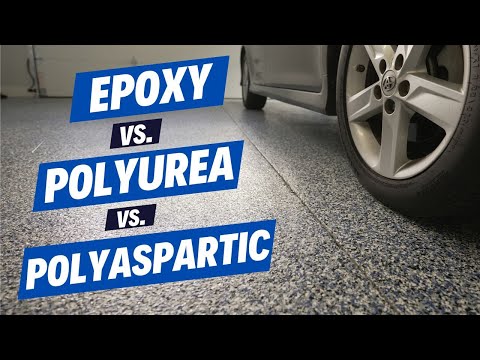
Tim Seay discusses epoxy, polyurea, and polyaspartic garage floor systems, including sunlight exposure, hot tires, and strength claims.
Video by Tim Seay · Decorative Concrete of Virginia